
The Katikkiro of Buganda, Charles Peter Mayiga, has called for a comprehensive reassessment of Uganda’s education system, urging education stakeholders to design a framework that better reflects the country’s social and developmental needs, with stronger emphasis on indigenous languages.
Speaking during a thanksgiving ceremony held in Kigo, Makindye-Ssabagabo in Busiro County, Mayiga said Africa’s development agenda risks being incomplete if education and health are not prioritised alongside infrastructure and industrialisation.
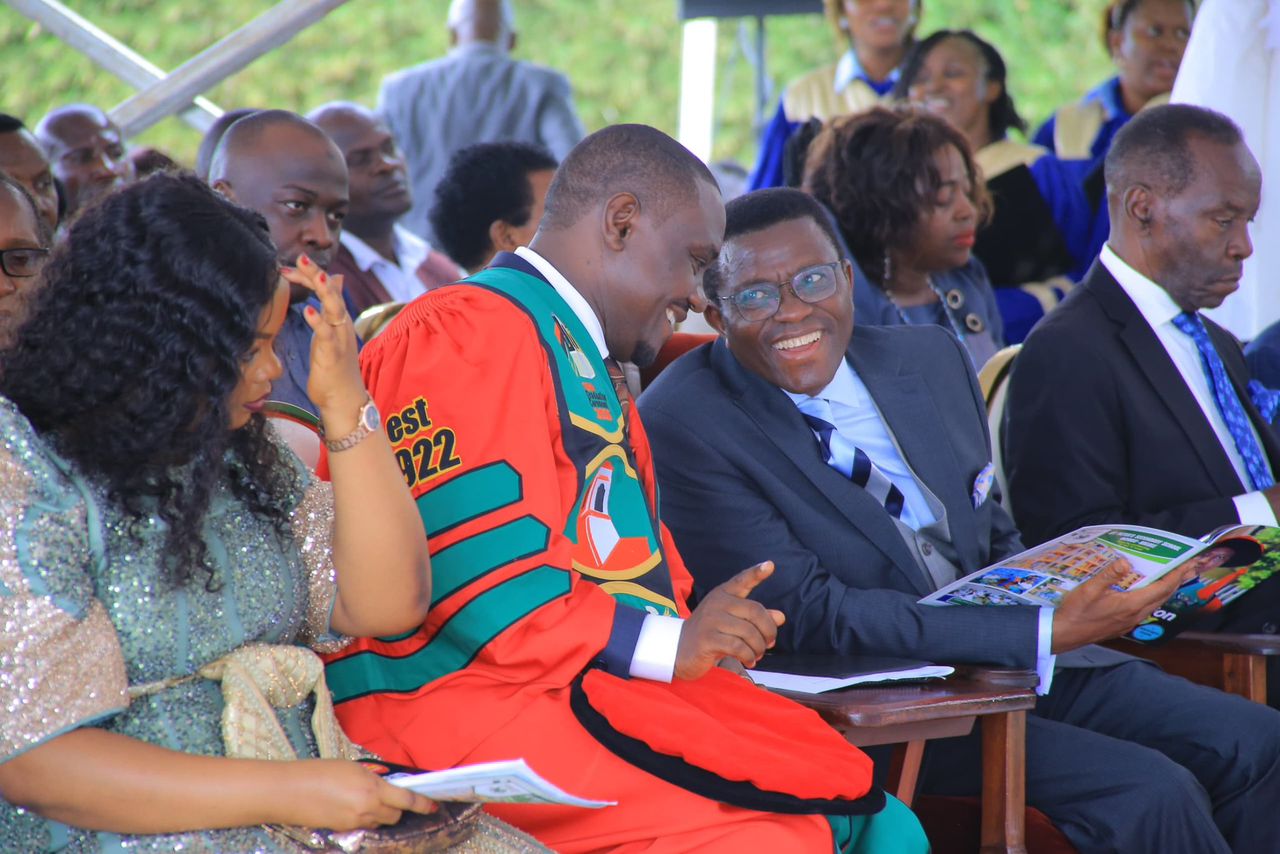
The event was held in honour of the County Chief of Bulemeezi County, Dr Ronald Mulondo, who recently attained a Doctor of Philosophy in Education from Makerere University on January 24, 2026.
“Many African countries have ambitious development plans involving roads, factories, airports, and attracting foreign investors. While these initiatives are important, the priority should be health and education systems that reflect our own realities and needs,” Mayiga said.
He added that while progress is being made in infrastructure development, Africa’s transformation would accelerate significantly if greater attention is given to strengthening human capital systems.
The ceremony began with Holy Mass led by the Vicar General of the Kampala Archdiocese, Msgr Rogers Kabuye Mukasa, representing Archbishop Paul Ssemogerere.
The homily was delivered by the Vicar General of Kasana–Luweero Diocese, Msgr Vincent Mukiibi, who congratulated Dr Mulondo and encouraged him to apply his knowledge in service of society.
In his remarks, Mayiga also congratulated Dr Mulondo on his academic milestone, noting that the Buganda Kingdom requires highly educated professionals to strengthen governance and institutional leadership.
He stressed that intellectuals and skilled experts are needed within Cabinet structures, county leadership systems, and other decision-making platforms to provide ideas that advance development within the Kingdom.
Mayiga further emphasised that administrators of schools and higher learning institutions should be professionally trained in education, arguing that such competence would improve learning outcomes and contribute to national transformation.
He also called for improved teacher training and fair remuneration as key pillars of reform.
Buganda Kingdom Minister for Social Services (Education and Health) and the Office of the Nnaabagereka, Choltilda Nakate Kikomeko, also congratulated Dr Mulondo and noted that the Kingdom intends to leverage his expertise to strengthen education programmes, including educational camps and youth training initiatives.
The Buganda Kingdom Minister for Local Government, Kabaka’s Tours and Diaspora Affairs, Joseph Kawuki, described Dr Mulondo’s achievement as evidence of discipline and perseverance.
He said the accomplishment demonstrates what can be achieved through determination, even while balancing leadership duties and family responsibilities.
Dr Mulondo, in his address, acknowledged that the journey to attaining a doctorate had been demanding, crediting his family, colleagues, and Buganda Kingdom leadership for their support.
He also highlighted persistent challenges in Uganda’s education sector, calling for urgent reforms guided by experts. He pointed to language of instruction as a major barrier, arguing that greater use of indigenous languages would improve comprehension and learning outcomes.
He cited countries such as Germany, China, and Japan, noting that their use of native languages in education has contributed significantly to development. He also observed that Uganda’s 1997 language policy has not been fully implemented.
“In countries such as Germany, China, and Japan, children are taught in their native languages, including scientific subjects, and this has greatly contributed to their development,” he said.
Dr Mulondo proposed that reform efforts should begin at household level, where children first acquire language skills, particularly from mothers, before transitioning into formal education systems.
He pledged to continue contributing research and practical recommendations aimed at improving Uganda’s education system.
The chairperson of the organising committee, Dr James Kyeyune Ssenyonjo, provided guests with a historical perspective on doctoral education, noting the academic rigor and sacrifice required to attain the qualification. He described Dr Mulondo as a role model whose achievement aligns with Buganda’s broader vision for institutional excellence.
The ceremony was attended by the Speaker of the Buganda Lukiiko (Parliament), Patrick Luwaga Mugumbule, Buganda Kingdom ministers, county chiefs, religious leaders, politicians, family members, and invited guests.
